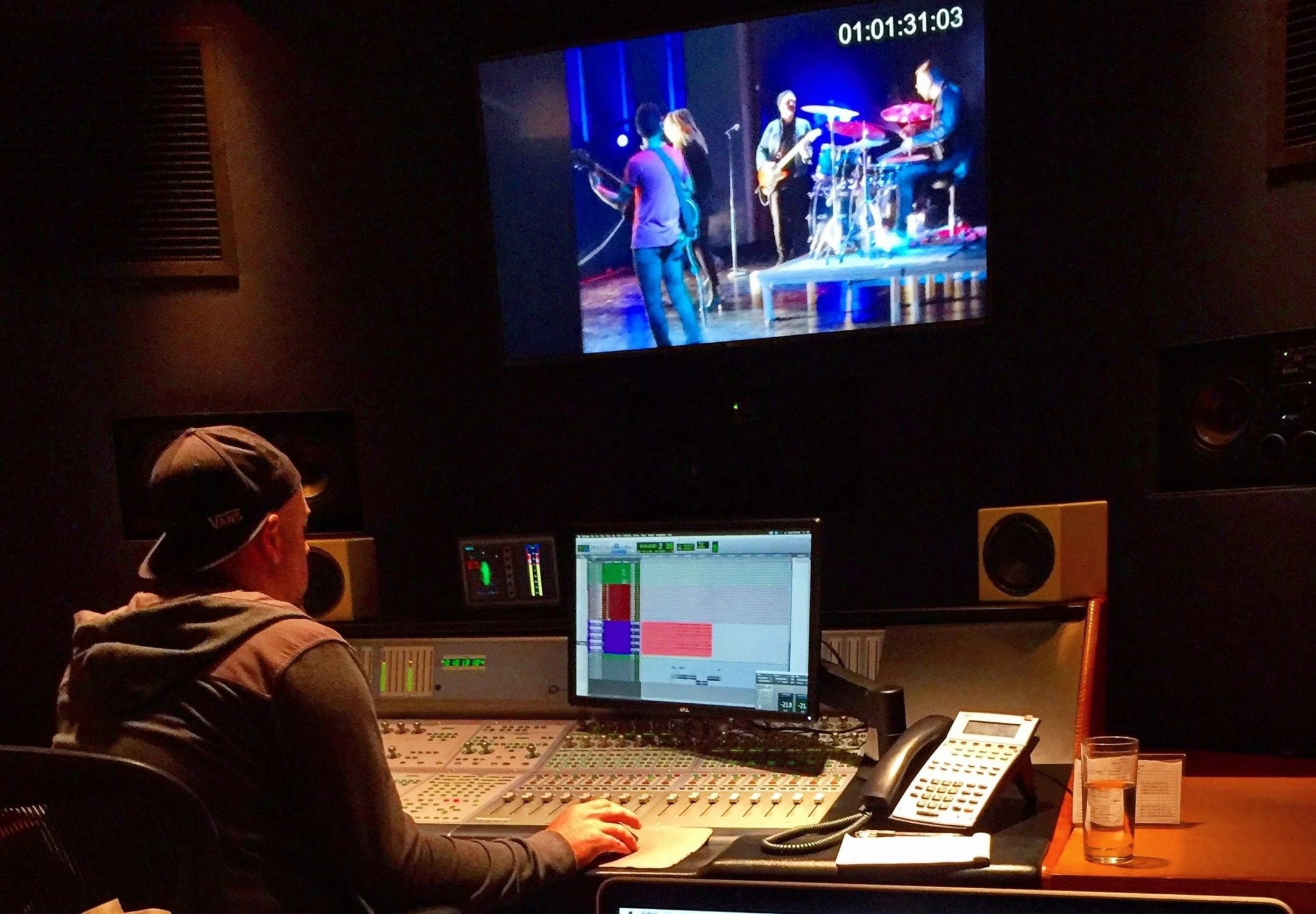
Performance-oriented video is created to support a defined action. The creative, audience, placement, offer and landing experience work together. A production decision should be evaluated in that context rather than credited with every later conversion.
Specify the decision before making versions
Define the primary action, supporting signals, test variable and how the campaign team will judge the comparison. A different opening, proof point or call to action can form a test when other important conditions remain sufficiently comparable.
The Deloitte NavigAite breakroom spot and its companion commercial show different creative situations for the same offering. Each uses a distinct narrative to communicate the product’s benefits.
Write the test question in terms the editor can use. For example, a campaign might compare an opening that names a customer problem with one that starts on a product demonstration. Keep the main offer and ending consistent if the purpose is to learn about the opening. If the team changes the audience, offer and creative together, the result may still inform campaign decisions, but it will not isolate the effect of that first shot.
Plan modular creative without losing the story
Alternate openings and endings are useful only when each resulting edit remains coherent. Capture the footage, graphics and audio needed for the planned versions. Record exact version names and delivery specifications so campaign results can be associated with the correct asset.
Build a version map before filming: identify each opening, the evidence that follows it and the ending that completes the thought. Read or play each combination through from beginning to end. A line such as “That is why we built it” needs an earlier statement that makes “that” clear; swapping modules can break those connections even when every clip looks polished on its own.
Capture clean pauses, alternate transitions and enough product coverage to connect the planned edits. Ask for the intended destinations early so the team can frame demonstrations and design graphics for the required crops. Keep version names stable from edit review through campaign reporting, with a separate revision number for corrections.
Separate production quality from campaign results
Watch the ad in its intended placement and device conditions. Check readability, pacing, captions, product accuracy and the next step. Then review campaign evidence with the people responsible for distribution and measurement.
A result may reflect a change in targeting, placement, spend or the landing experience rather than the edit alone. Report what the data supports and the decisions it suggests. Avoid treating views as sales or promising a return on investment without evidence.
Turn the findings into the next brief
Turn an observation into a specific next action. If viewers leave before the demonstration, test whether bringing the demonstration forward improves the response; if viewers click but do not complete the next step, review the destination and offer with the campaign team. Keep the creative question distinct from the measurement limitation, and avoid expanding production around a result the available data cannot explain.
Document the version, audience, measurement window, observation and next decision. Keep the conclusion narrow enough to be useful. Our A/B testing guide and measurement guide develop this workflow. Video advertising production covers creative development and delivery; distribution responsibilities belong in the agreed project scope.