Choose a format by the question the audience needs answered. The same company may need several formats, each with a distinct role.
Match the Format to the Decision
- Interview: explain a subject through a person with firsthand knowledge.
- Product demonstration: show a workflow or product behavior.
- Customer story: explain an actual experience, decision and approved outcome.
- Brand film: establish identity through a focused story or point of view.
- Commercial: introduce a message in a defined advertising placement.
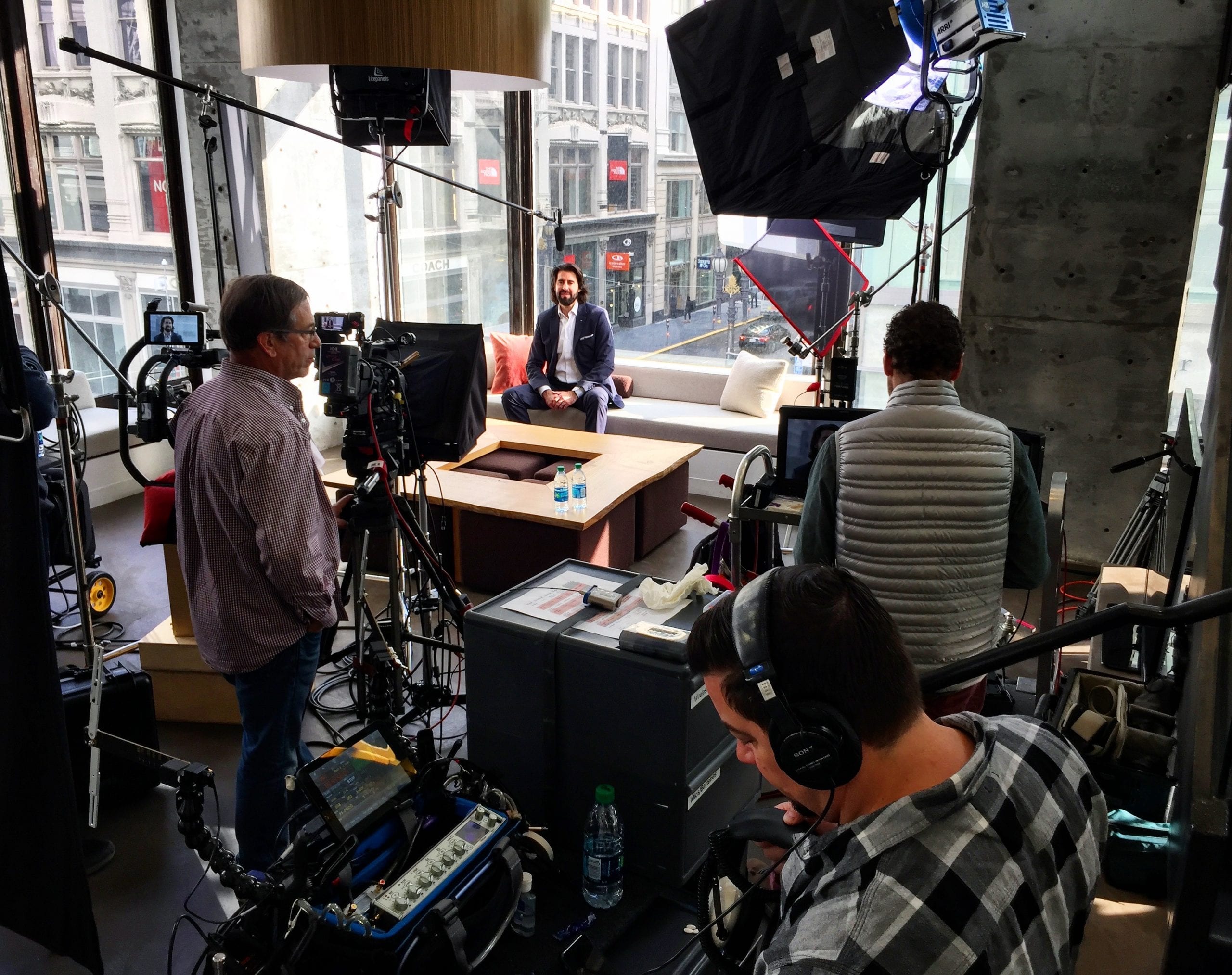
The PwC and Surfaceink interviews explain a business integration; the Google product video demonstrates a product; the GoDaddy entrepreneur film builds a brand story around a person and workplace.
An interview works well when the audience needs a person’s judgment or firsthand explanation. Its strength depends on specific answers and useful supporting footage; a speaker repeating broad brand claims may add little. A product demonstration is a better fit when the viewer needs to see what happens, which steps are involved or how an interface behaves. Plan the demonstration around a recognizable task rather than a tour of every feature.
A customer story connects a starting situation, a decision and the customer’s experience after that decision. Confirm the available evidence and approvals before promising an outcome in the script. A brand film has a different job: it should make the company’s character or point of view tangible through people, actions and a focused story. It does not need to carry the full explanation of every service.
A commercial must work within its planned placement and give the audience a clear reason to pay attention and act. A training or onboarding video instead needs to help someone perform a task, often with a sequence they can revisit. For an internal leadership update, the priority may be explaining what has changed, why it matters and what employees should do next. These differences should shape the script and coverage from the outset.
Scope the Information and the Output
Define the audience, what they already know, the evidence available, where the film will appear and what the next step should be. Then decide which participants, demonstrations, locations and graphics are necessary. These decisions matter more than choosing a format because it is popular.
Use a simple hypothetical launch to test the choices. A short commercial could introduce the problem, a product-page demonstration could explain the workflow and a customer interview could help a prospective buyer evaluate the experience. Those assets can share a shoot, but each needs its own evidence and ending. Plan the common coverage and the unique requirements before deciding how many finished films the production can support.
If resources allow only one video, choose the audience question that currently creates the greatest obstacle. Write the answer the viewer needs, identify what can be shown credibly and select the format that carries it most clearly. That decision provides a stronger starting point than requesting a company overview and hoping it will serve sales, recruiting and training equally well.
Use our corporate video production and product demo services to compare production approaches. A focused brief can identify a primary film and supporting versions without asking one asset to carry every message.