Viewers may forgive an imperfect image when the story is clear, but unintelligible dialogue quickly breaks trust and comprehension. Corporate video audio begins before recording with a location, script, wardrobe, schedule, and microphone plan designed around the voices and environments the audience needs to hear.
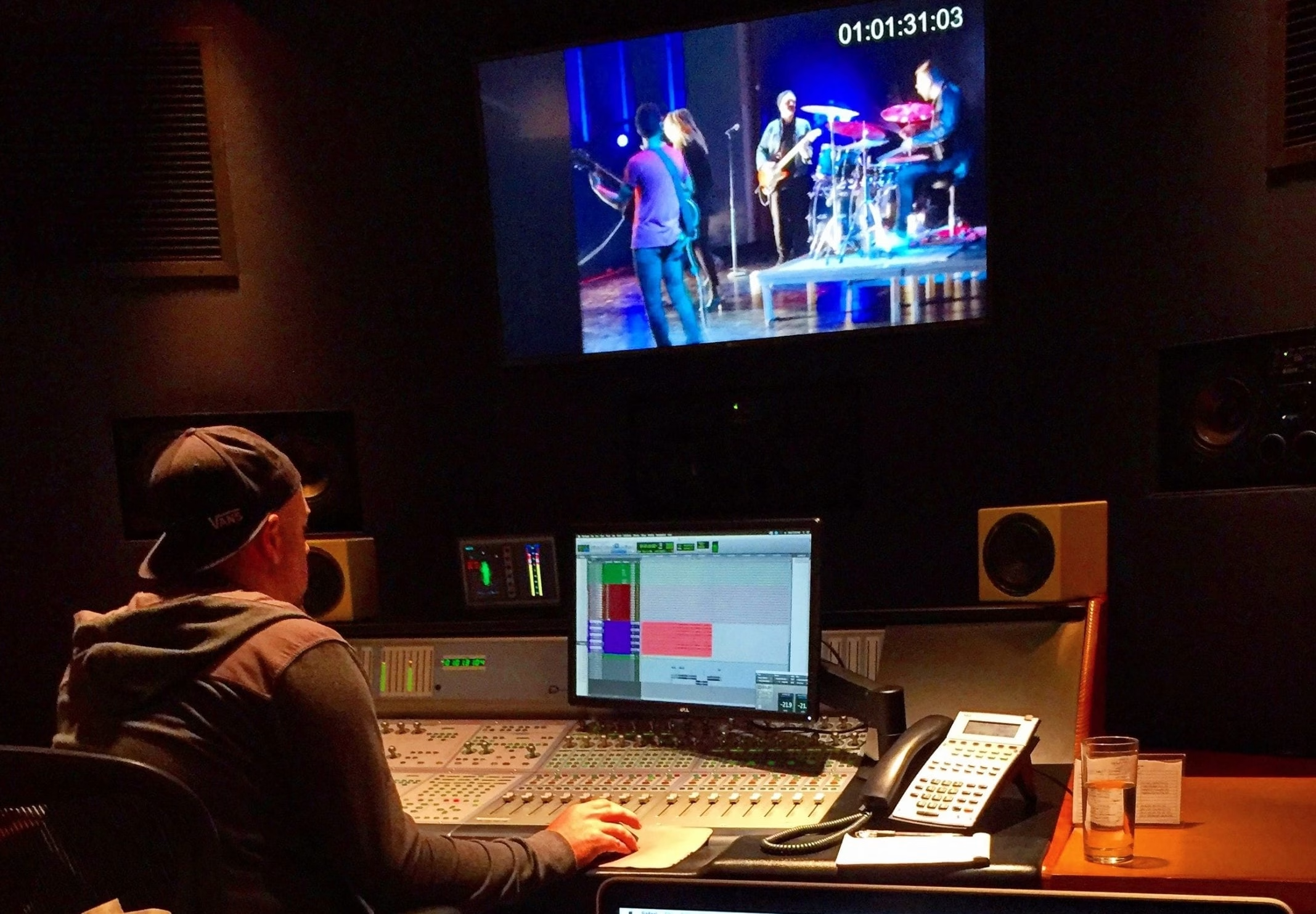
Production sound and post production are one workflow. Good recording creates options for editing, while careful editing and mixing turn separate voices, rooms, music, and effects into a coherent experience across devices.
Scout the sound, not only the picture
Listen for heating, cooling, refrigeration, traffic, aircraft, elevators, construction, public address systems, alarms, phones, computer fans, reflective rooms, and adjacent activity. Ask what can be controlled and for how long. Record tests at the time of day the shoot will occur and identify a quieter alternate space.
A visually attractive location may be unsuitable for an interview if the noise is unpredictable or the room cannot be treated. Make that tradeoff before the schedule is locked.
Choose microphones for the voice and scene
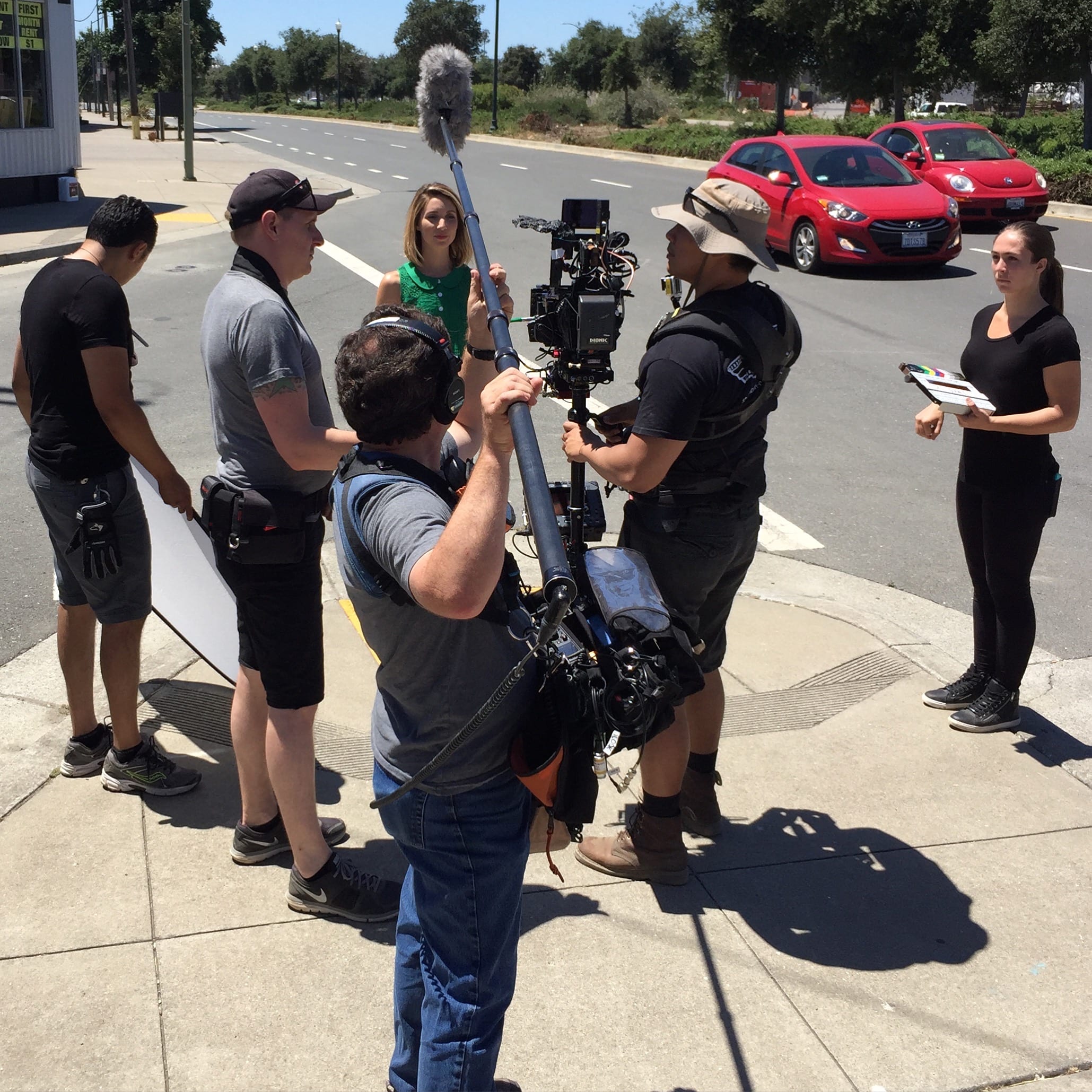
A boom microphone can sound natural and avoids a visible mic, but it needs a skilled operator and workable placement. A lavalier can stay close to the speaker but may reveal clothing noise, jewelry, wireless problems, or a visible cable. Many productions record both so the editor has options.
Confirm clothing and movement during wardrobe planning. Monitor every take with headphones, record clean levels with headroom, and capture room tone and specific ambient sound before leaving the location.
Protect dialogue through production
Schedule time to address noise rather than assuming software will remove it later. Ask for a clean take when a word is covered, mark problems in notes, and record wild lines when repeating the scene is impractical. Keep sample rate, timecode, track labels, media, and reports consistent with the camera and post workflow. An experienced interview video production team plans sound, eyeline, lighting, and performance together so one department does not solve its problem by creating another.
Edit and mix for meaning
Dialogue editing selects clear performances, manages pauses, repairs transitions, and controls distracting differences without making speech feel artificial. Noise reduction should be used carefully because aggressive processing can create artifacts. Music and effects should support structure and emotion without covering essential words.
For healthcare and biotech communication, accurate terminology and intelligibility may be especially important. Review names, technical terms, claims, and pronunciations against the approved script or transcript.
Deliver for the real listening environment
Confirm channel layout, loudness requirements, peaks, music rights, alternate language, caption timing, descriptive transcript, and whether clean audio or separate stems are required. Test on headphones, laptop speakers, phones, conference room systems, and the intended platform where practical.
Productions in the San Francisco Bay Area may move among offices, stages, laboratories, restaurants, streets, and event spaces. A location specific sound plan keeps those environments from becoming preventable post production problems.
Archive the approved audio elements
Keep organized production recordings, project files, licenses, voice over sessions, music versions, mixes, stems, captions, transcripts, and final exports. Clear names and notes make later revisions, translations, cutdowns, and platform changes much easier to manage.
Production Context: Sitecore three-camera interview
Our Sitecore Founder Fireside Chat used a classic three-camera configuration: a wide two-shot plus dedicated singles for interviewer Lee Miles and interviewee Bjarne Hansen. Clean, consistent dialogue across all three angles was essential because the edit needed to move freely among questions, answers and reactions without disrupting the conversation.