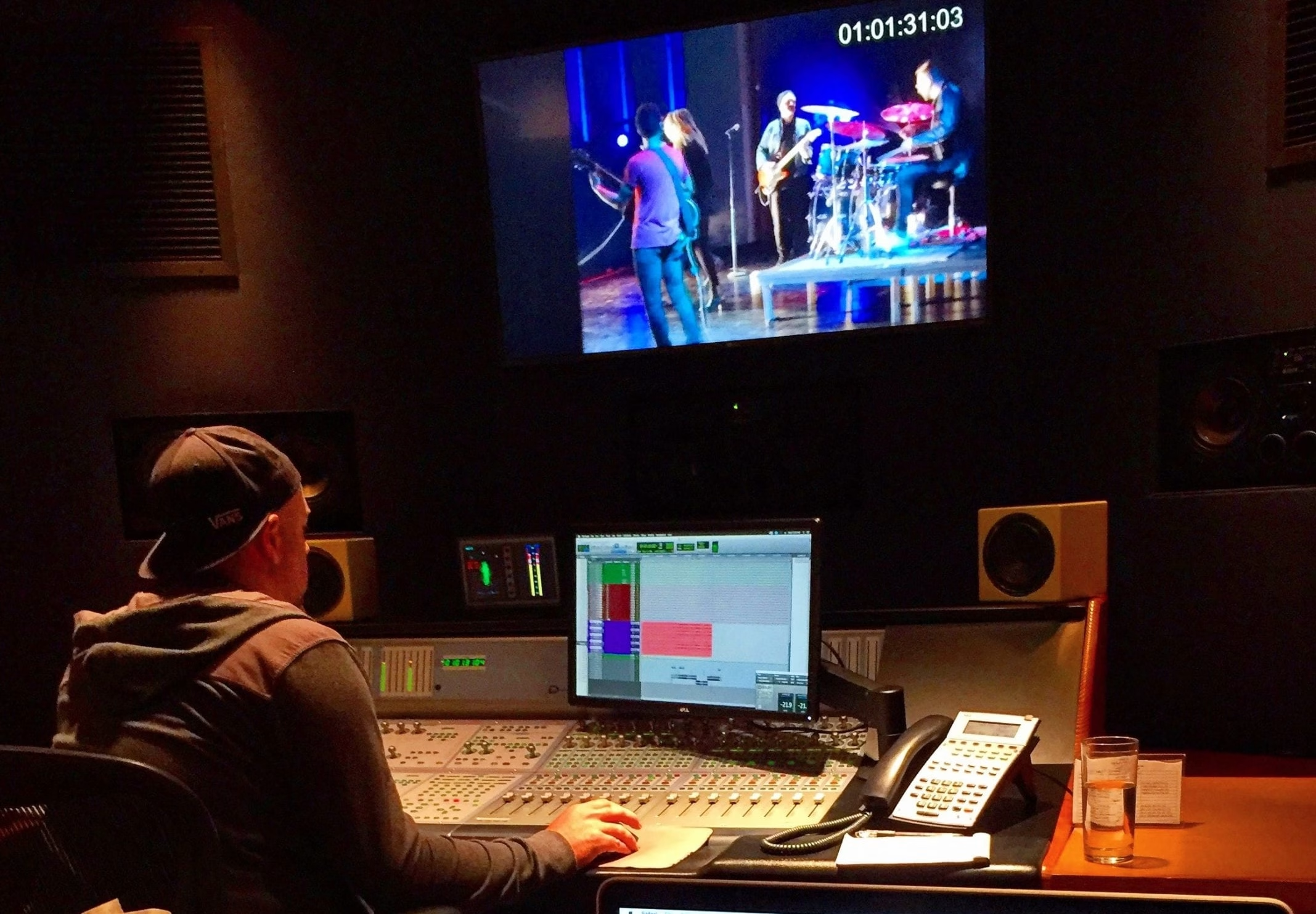
Generative AI can contribute to visual exploration and selected production tasks. It also introduces questions about continuity, detail, source materials and review. The useful starting point is the job an element must perform in the film, not a promise that an automated workflow will be faster or cheaper.
Define the experiment
Identify the intended imagery, audience, references and quality threshold. Separate concept exploration from material intended for final release. A rough frame that communicates a direction may still need extensive work before it can function in a sequence.
Write the test as a production question: can this approach supply a short abstract transition, help compare visual directions, or create a background that can be finished within the schedule? Set a review point and a limit on exploration before committing the whole sequence. The first useful outcome may be a decision about what to film, rather than a generated shot for the final master.
Assess continuity and usable detail
Review people, hands, typography, packaging, interfaces, movement and the consistency between shots. The ability to generate an appealing image does not establish that it accurately depicts a product or can be repeated across a campaign. Conventional filming, photography, animation and compositing remain useful where precise control matters. A hybrid approach can assign each method the work it handles best.
Build a representative test with the hardest requirement included. If a sequence depends on a recognizable product, show the label, shape and interaction that must remain accurate. If it needs several connected shots, review them together rather than approving isolated frames. Ask whether a requested change can be made without losing the parts already approved, and record the finishing work still needed.
Agree on materials and review
Before using client information or assets, establish which tools and accounts are approved, what must remain confidential and who can authorize use of the material. Identify the people responsible for checking product claims, likenesses, rights and final distribution. Record the approved versions and relevant source information. Human creative direction, editing, sound and quality control remain part of the production.
Compare complete workflows
Compare the full sequence against a conventional alternative using the same brief. Include time for selecting material, repairing details, matching adjacent shots, adding graphics and completing client review. An approach that works for a loose mood film may be unsuitable for a precise product demonstration, even when both start from attractive images.
Keep a fallback in the production plan. A filmed insert, designed graphic or licensed background may be the more predictable way to finish a particular moment. Decide when the team will switch methods and preserve editable assets so the experiment does not become a dependency that holds up the entire delivery.
Judge an approach by the effort needed to reach an approved result, including revisions and finishing. A quick initial generation may save time in exploration while creating additional work elsewhere. Our AI-assisted production service addresses these method choices. For films explaining an AI product to customers, see AI and emerging technology video production.