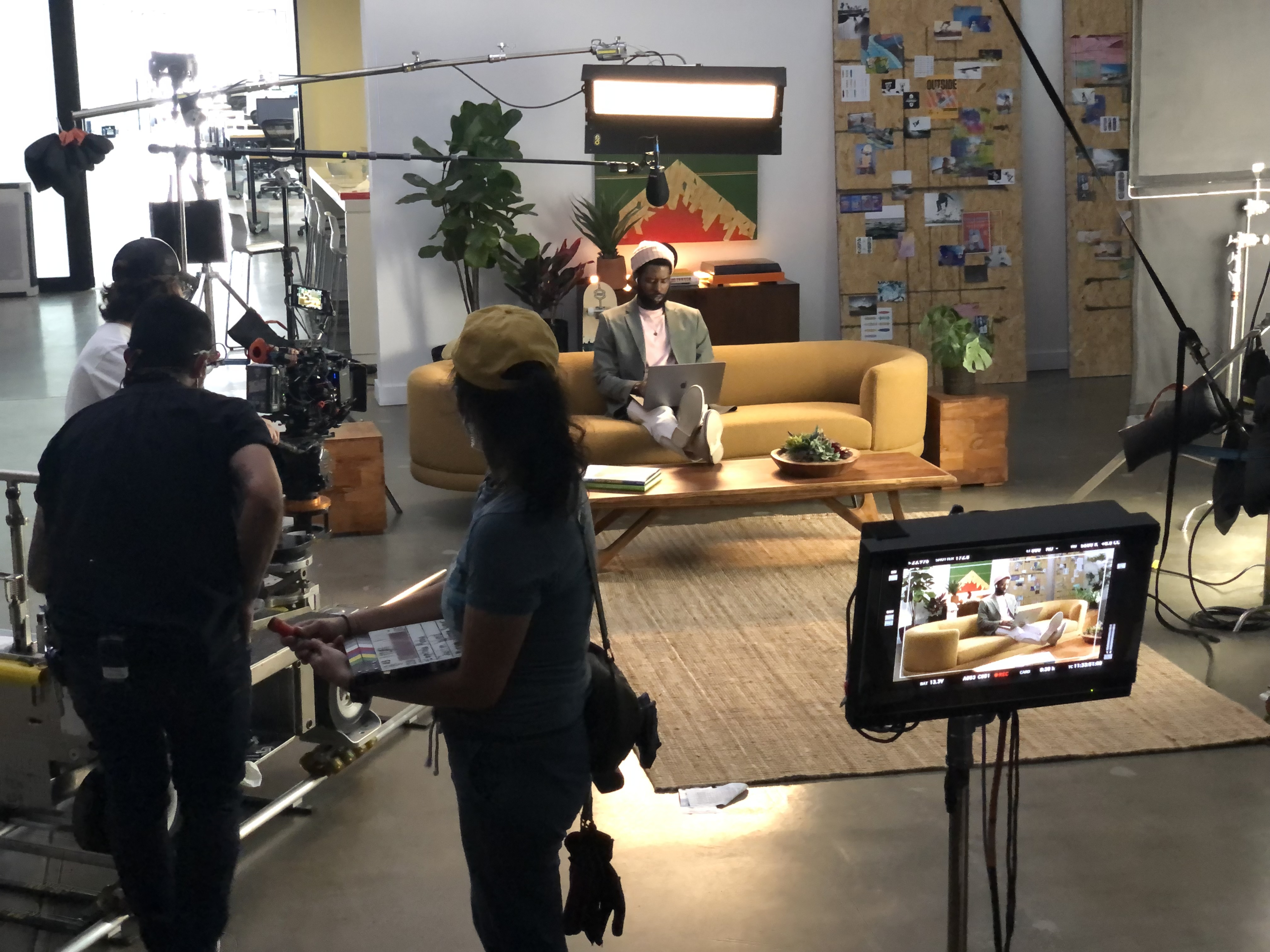
A script supervisor is the crew member responsible for tracking continuity and maintaining an accurate record of what happens during filming. On scripted productions, that record connects the director, camera department, performers, production team, and editor. The role is especially useful when scenes are shot out of order, multiple takes change small details, or a project must match footage recorded at another time or location.
Track continuity from take to take
The script supervisor watches details that need to remain consistent when the edit joins separate shots. That can include dialogue, performer movement, props, wardrobe, hair and makeup, eyelines, camera position, and other visible changes. The goal is not to freeze every detail. It is to know what changed, why it changed, and whether the change will create a problem when shots are cut together.
For a scripted corporate film or commercial, this becomes more important as the number of scenes, actors, products, and setups increases. A simple single-camera interview may not require a dedicated script supervisor, but a multi-scene production can benefit substantially from one.
Maintain an accurate record of the script and takes
The script supervisor follows the working script and records what was actually photographed. Notes can identify take numbers, dialogue changes, performance differences, camera information, timing, and the director's preferred takes. A clear record helps the production know what has been completed and gives post-production a useful map of the material.
This work begins with the same planning logic used in a script breakdown. The production identifies what each scene requires, then the script supervisor tracks how those requirements are executed on set.
Keep departments aligned
Continuity often crosses department lines. A prop may move between takes. A jacket may be buttoned differently. A monitor may display a new screen. A glass may be fuller in one angle than another. The script supervisor communicates with the relevant department when a detail needs to be restored or when a deliberate change should be documented.
The role works closely with the director and assistant directors while also interacting with camera, art, wardrobe, hair and makeup, sound, and production. Our guide to essential crew roles on a corporate video shoot explains how those departments fit together.
Give post-production better information
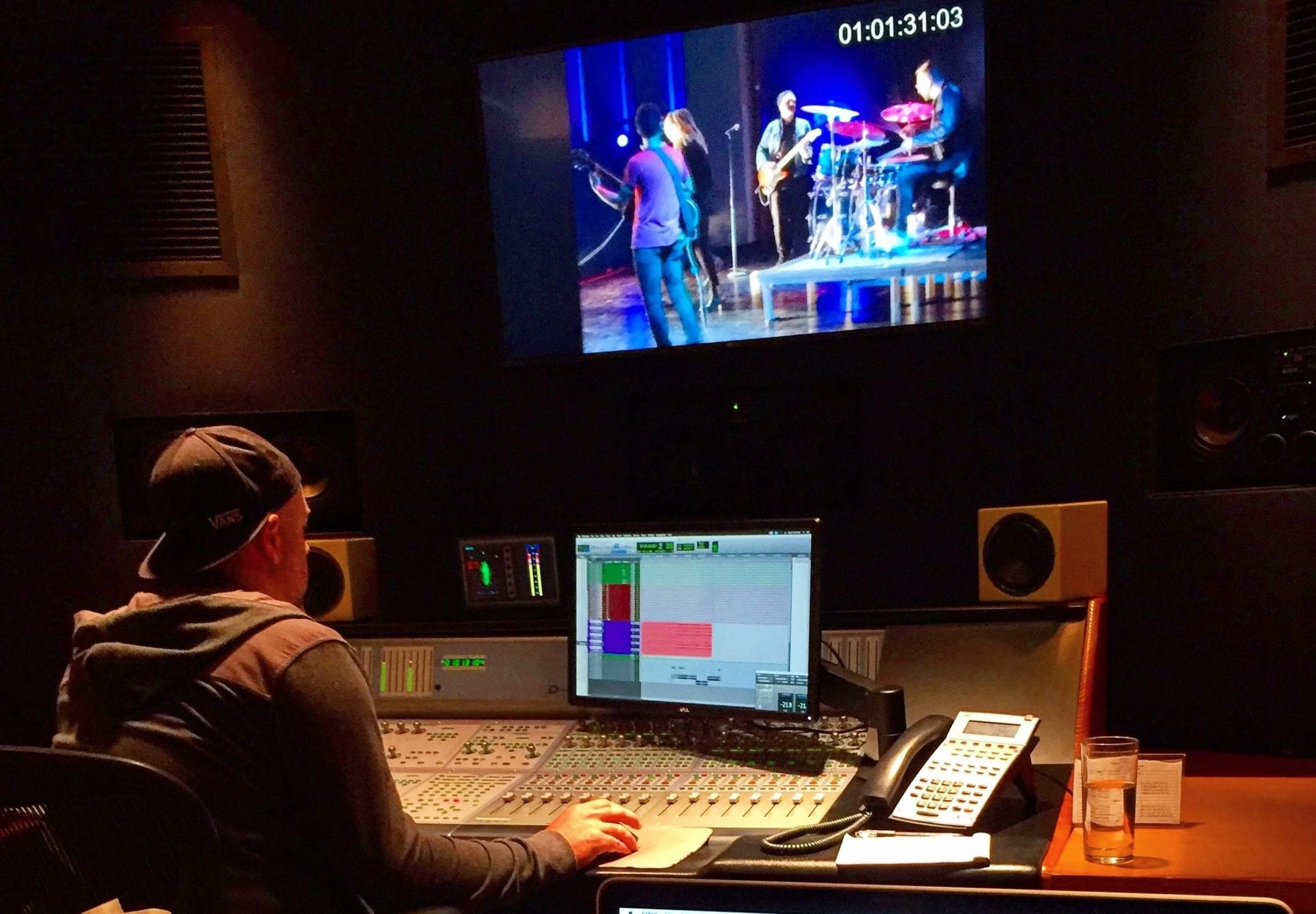
Editors need to know what was intended as well as what was recorded. Script notes, lined scripts, take information, and continuity records can reduce uncertainty when hundreds of clips arrive in the edit. They are particularly helpful when the production spans several days or when a reshoot must match an earlier setup.
The script supervisor does not replace the editor's judgment. The record gives the editor and director context so they can make decisions faster. That connection between physical production and the corporate video post-production process is one of the role's most useful functions.
Decide whether the production needs the role
Consider the complexity of the script, number of performers, amount of coverage, continuity risk, and likelihood of later pickups. A scripted commercial, training film, or narrative brand piece may justify a dedicated script supervisor. A straightforward interview may not. Staffing should follow the production rather than a fixed crew template.
For corporate video production, Capitola Media plans crew responsibilities around the actual creative and logistical requirements of the shoot. When continuity matters, a strong script supervisor protects both the filming day and the edit that follows.