Drone Video Production
Drone video production for brands and companies that need cinematic aerial footage for events, real estate, commercial campaigns, corporate videos, and social media content.
Drone Video for Establishing Place and Scale
Capitola Media includes aerial footage when it helps explain a location, facility, landscape or movement that is difficult to see from the ground. The aerial sequence should have a clear role in the finished story.
An aerial view with a purpose
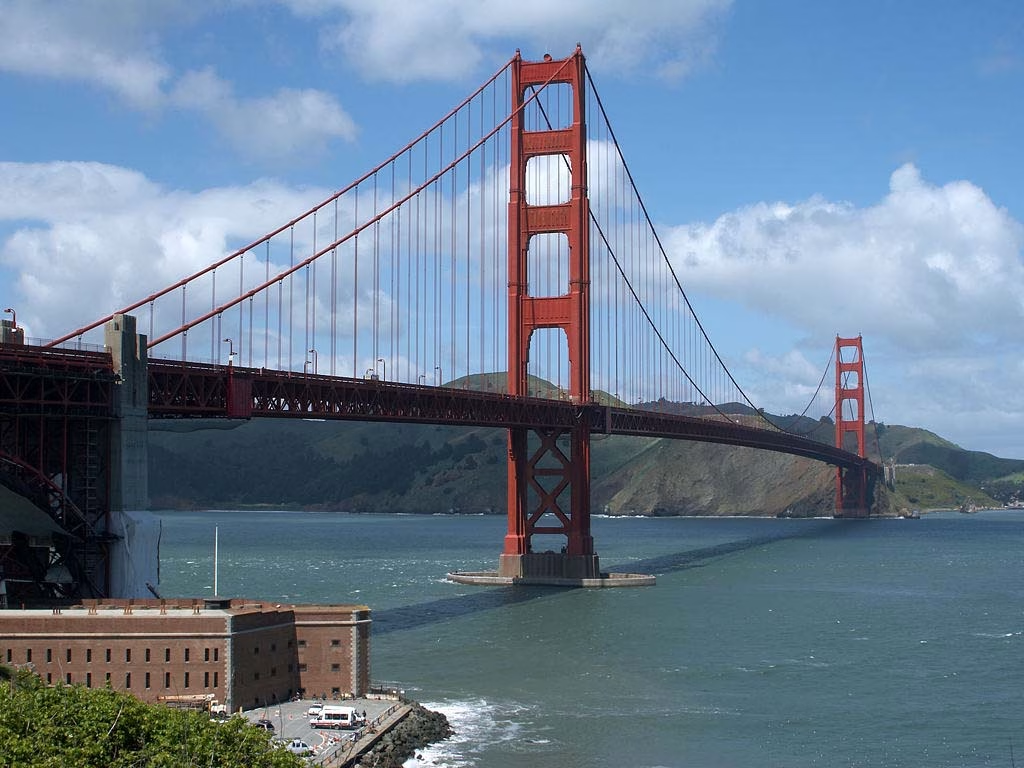
Golden Gate Bridge and San Francisco Bay aerial imagery shows how scenic and establishing footage can orient a viewer quickly. A facility overview may need geography and access routes. A brand film may use one brief establishing shot. Neither automatically needs a long aerial sequence.
Hire only licensed and insured drone pilots
Only hire licensed and insured drone pilots for commercial video production. Confirm that the pilot in command holds an FAA Part 107 Remote Pilot Certificate, meets current training requirements, and carries aviation liability insurance appropriate to the assignment. Ask for proof of certification and coverage before booking; owning a drone or having an impressive reel is not enough.
The operator must also review airspace restrictions, obtain any required FAA authorizations or waivers, and confirm applicable location permissions before filming. A pilot certificate does not authorize every flight, and permission from a property owner does not replace FAA approval where it is required. Taking these steps helps protect people and property and avoids putting the production at risk of regulatory violations, delays, or a cancelled shoot.
Evaluate the location before promising a shot
Site access, airspace, people, nearby activity, weather, light and operating conditions affect feasibility. The production team must establish the appropriate qualified operator and required permissions for the assignment. A requested flight should not be treated as guaranteed before that review.
Plan an alternative when aerial capture is not feasible. Ground photography, an existing licensed view, graphics or a different location may serve the same communication purpose.
Design the aerial coverage around the story
We begin with what the viewer needs to understand from above. A wide view may orient the audience to a campus, a reveal may introduce a building, and a controlled movement may connect separate parts of a site. The shot list identifies those purposes and how the aerial material will join interviews, ground footage and graphics in the edit.
That planning also establishes what must be visible. A facility overview might depend on a particular entrance, relationship between buildings or surrounding landscape. A scenic opening may instead need room for a title and a movement that leads naturally into the next scene. Defining the editorial purpose helps the production team assess practical alternatives if the preferred angle is unavailable.
Coordinate aerial and ground production
Location preparation brings the aerial operator together with the producer and site contact. The team reviews the proposed filming areas, normal activity, access arrangements and the time available to carry out the work. A busy facility may require a dedicated filming window, while an exterior establishing shot may depend on light that does not coincide with the interview schedule.
The aerial and ground camera teams also need a shared visual plan. Direction of movement, time of day, framing and the intended color treatment affect how smoothly the footage works together. Recording several unrelated scenic passes is less useful than capturing a small set of images designed to establish the location and connect it with the people or operations inside.
Plan for changing conditions and a useful handoff
Weather and site activity can change the day’s priorities. We establish who will make the operating decision and how the schedule can adapt, with substitute coverage identified for important storytelling needs. A ground-level view or an approved graphic may explain the same relationship without requiring the entire film to depend on one aerial shot.
Postproduction selects the movements that contribute to the sequence and integrates them with the surrounding images, sound and graphics. Delivery can be part of a completed corporate film or a defined footage assignment. Share the location, intended subjects, filming window and finished use so the production can assess feasibility and scope the work before committing to specific coverage.
Integrate the footage with the production
Camera movement, exposure, color and framing should connect with the rest of the film. Scope includes the intended shots, location, schedule, coordination and delivery requirements. Our aerial planning guide explains the decision process. Corporate and commercial production provide the wider context for integrating aerial work.
Need the right production approach?
Tell us what you are making, where it needs to work, and what success looks like.